
Voting Integrity
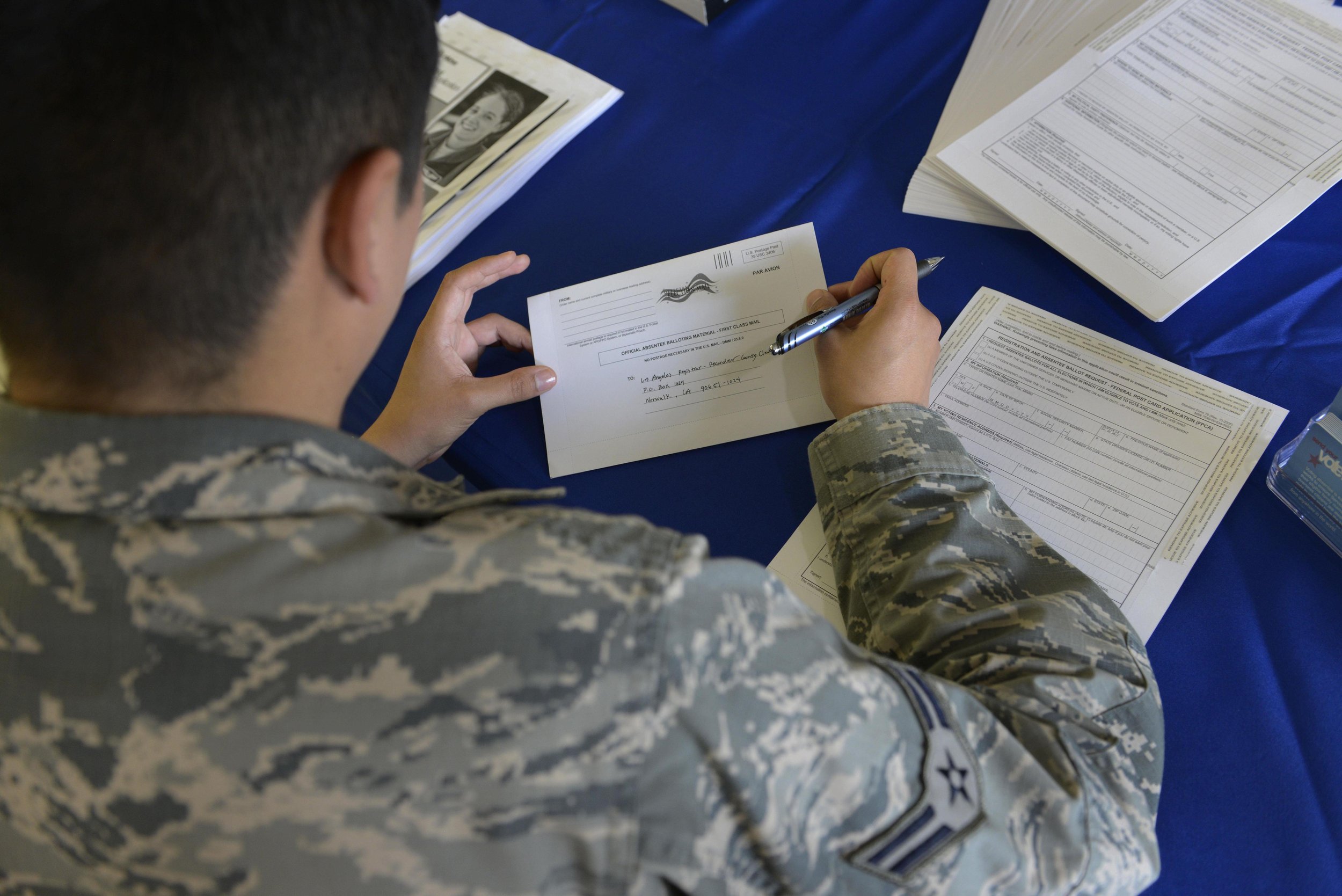
What Is Voting Integrity?
The processes, laws, and security infrastructure designed to ensure elections are conducted fairly, accurately, and free from external or internal manipulation.
Protecting the Right to Vote
NSL4A advocates for the integrity of our voting system and believes every citizen has the right to vote, regardless of circumstance, disability, wealth, or status.
Voting From Anywhere
State governments have a responsibility to ensure servicemembers, Foreign Service members, and voting-age dependents away from their home of record have every opportunity to cast their ballots.
Background
Understanding America's Election System
Election administration in the United States is shaped by the Constitution, federal and state laws, and more than two centuries of evolving voting practices.
Constitutional Foundations
-
Article I, Section 4, Clause 1
States establish the times, places, and manner of congressional elections. Congress may make or alter rules governing federal elections.
-
Article II, Section 1, Clause 2
Each state appoints its presidential electors in the manner directed by state law, subject to constitutional and federal requirements.
-
Requires states to provide voters equal protection under the law and protects against unconstitutional vote dilution or arbitrary treatment.
-
15th Amendment: Prohibits denying or abridging voting rights because of race, color, or previous condition of servitude.
19th Amendment: Prohibits denying or abridging voting rights based on sex.
24th Amendment: Prohibits conditioning the right to vote in federal elections on payment of a poll tax or other tax.
26th Amendment: Prohibits denying or abridging the voting rights of citizens 18 or older based on age.
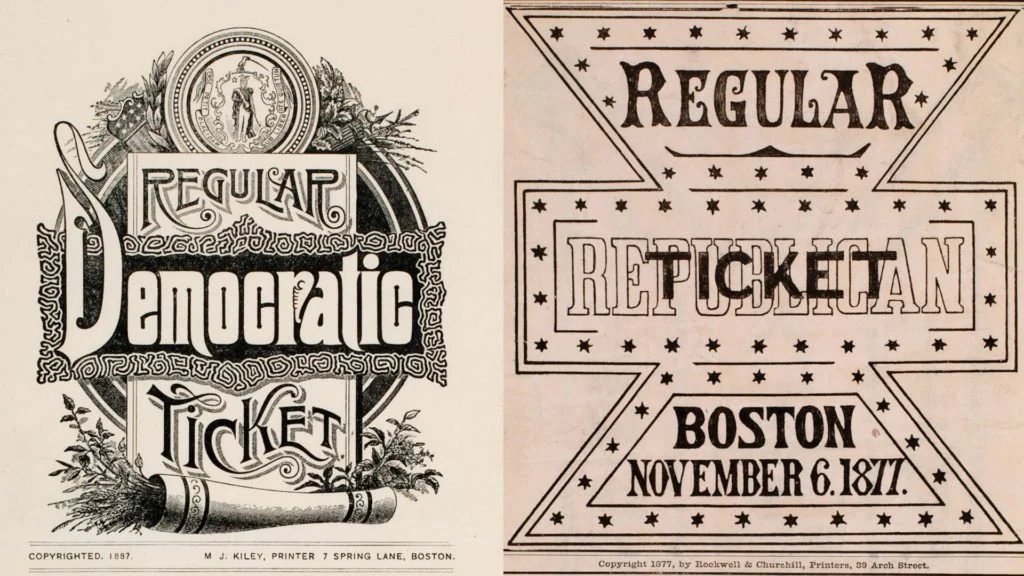
Party-printed ballots from the 1870s and 1880s illustrate the evolution of American voting. Images courtesy of the American Antiquarian Society.
Federal Statutes
-
Establishes federal requirements governing voter registration for federal elections.
Requires states to maintain accurate and current voter registration lists while protecting eligible voters from improper removal.
Requires list-maintenance programs to be uniform and nondiscriminatory.
Learn More → here
-
Establishes minimum federal election-administration requirements, including standards for voting systems, provisional voting, and statewide voter registration databases.
Requires states to maintain a centralized, computerized statewide voter registration list and safeguards intended to keep voter records accurate while preventing eligible voters from being removed in error.
Learn More → here -
UOCAVA provides the legal basis for absentee voting requirements in federal elections for U.S. citizens who are active members of the Uniformed Services, Merchant Marine, commissioned corps of the Public Health Service and National Oceanic and Atmospheric Administration, their eligible family members, and U.S. citizens residing outside the United States.
-
The MOVE Act amended UOCAVA and other statutes to provide greater protections for servicemembers, their eligible family members, and other overseas citizens. Among other provisions, the MOVE Act requires states to send absentee ballots to UOCAVA voters at least 45 days before federal elections.
Historical Evolution
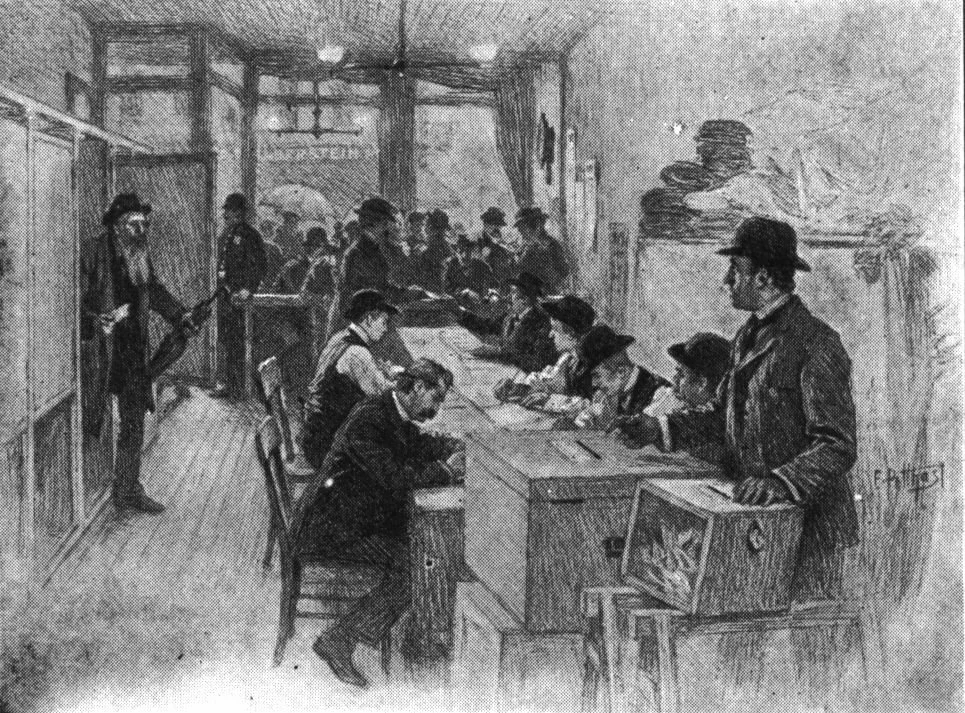
A New York polling place in 1912, with voting booths visible on the left.
Image source: E. Benjamin Andrews, History of the United States, Vol. V (1912).
Want to learn more about the history of voting in America? →
Founding Era through the Civil War
Early elections lacked uniform rules and strong ballot secrecy, prompting gradual reforms and the first widespread use of absentee voting.
Gilded Age & Progressive-Era Reforms
Political machines and election abuses drove reforms including government-printed ballots, private voting, and more standardized election procedures.
Disenfranchisement & the Jim Crow Era
Poll taxes, literacy tests, and intimidation suppressed Black voting rights until federal protections were strengthened through the Voting Rights Act.
Expansion of Absentee & Mail Voting
Originally developed largely for military voters, absentee voting gradually expanded to civilians and evolved into broader mail-voting systems.
The Modern Era
Election reforms now emphasize secure technology, accurate registration, cybersecurity, audits, voter access, and public confidence in election results.
How American Elections Evolved
The way American elections are run has evolved over time. For more than two centuries, states and the federal government have modified election laws and procedures in response to challenges involving voter access, ballot secrecy, fraud and coercion, discriminatory practices, changing technology, and the need for public confidence in election results.
Mail-in Voting
A Practice With Deep Roots in American Elections
Mail voting is not a recent innovation. It dates from the Civil War and the Presidential Election of 1864. Like many features of American election administration, it developed incrementally as the country confronted a practical question
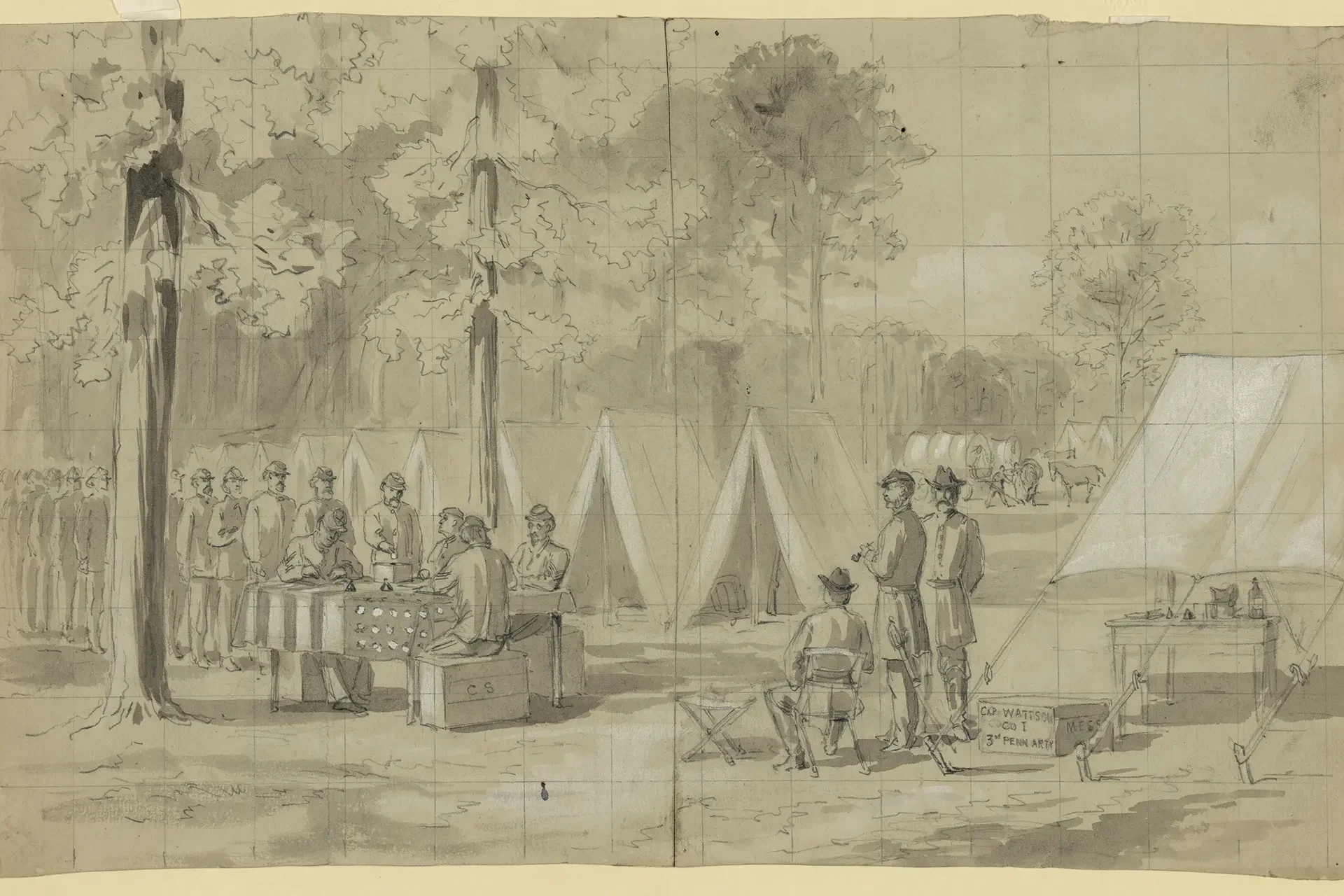
Pennsylvania soldiers cast their ballots during the Civil War, 1864. Illustration from Harper’s Weekly. Courtesy of the Library of Congress.
Learn more about the evolution of mail-in voting.
Why Election Integrity Matters to National Security
Secure, trusted elections are essential to democratic stability, continuity of government, and the peaceful transfer of power. They also reduce opportunities for foreign adversaries and extremist actors to exploit division and undermine confidence in American institutions.
Protecting Against Foreign Interference
Foreign adversaries use cyber operations and influence campaigns to target election systems, amplify divisions, and undermine confidence in U.S. democratic institutions.
Safeguarding the Peaceful Transfer of Power
Trusted election outcomes support an orderly transfer of political authority and continuity of government, reducing the risk of instability, violence, and institutional disruption.
Preserving Alliances & Strategic Credibility
Democratic stability strengthens U.S. credibility abroad, reassures allies of American reliability, and demonstrates resilience against authoritarian efforts to weaken democratic institutions.
Countering Political Violence & Extremist Exploitation
False or manipulated claims about elections can be exploited to encourage radicalization and political violence. Transparent, secure, and verifiable election processes help reduce that vulnerability.
Want to learn more about why voting integrity is a national security issue?
Opposing Compressed Timelines
NSL4A has filed amicus briefs challenging sudden election-year changes that fail to account for delays in military mail systems.
The Significance of UOCAVA
The Uniformed and Overseas Citizens Absentee Voting Act (UOCAVA) establishes federal absentee voting protections for eligible servicemembers, their families, and Americans living abroad.
The Military and Overseas Voter Empowerment (MOVE) Act strengthened these protections, including a requirement that states send absentee ballots at least 45 days before federal elections, subject to applicable exceptions.
Defending the Rights of Those Who Defend the Country
National security professionals face unpredictable relocations, limited mail access, and strict operating environments, including deployments at sea or remote embassies. NSL4A works to protect their voting rights when sudden changes to state election rules threaten their ability to cast a ballot.
Protecting Global Delivery Chains
NSL4A advocates for reliable voting procedures across APO, FPO, DPO, and embassy mail systems.

Staff Sgt. Dale Blakeslee casts his ballot in the 1944 U.S. election in the Mariana Islands. Courtesy of the U.S. Air Force.
NSL4A Legal Efforts to Protect Voting Rights
NSL4A has filed amicus curiae briefs and engaged in other legal advocacy to protect the voting rights of military members, diplomats, their families, and other Americans living overseas, including defending state ballot-receipt laws that account for the realities of overseas voting.
NSL4A has challenged federal ballot-mail requirements, arguing they conflict with protections under the Uniformed and Overseas Citizens Absentee Voting Act (UOCAVA) and could prevent otherwise eligible overseas voters from having their ballots delivered and counted.
What Are NSL4A's Concerns?
NSL4A is concerned about changes to election laws and procedures that could make it more difficult, if not impossible, for eligible Americans, particularly military and overseas voters, to exercise their right to vote.
Federal Statutory Red Lines
-
Changing ballot markings, vote tallies, or official voting records.
-
Offering compensation for a vote or threatening physical or financial harm to influence a voter.
-
Intentionally providing false information about when, where, or how to vote to prevent qualified voters from casting ballots.
-
Certain violations involving contribution limits, concealed sources of contributions, prohibited sources, or other unlawful campaign-finance activity.
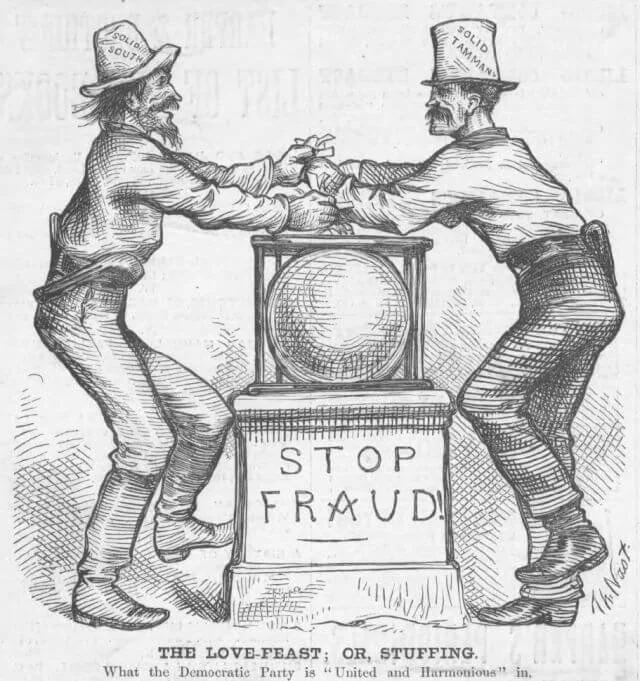
“The Love-Feast; or, Stuffing,” a political cartoon depicting Northern and Southern Democrats stuffing a ballot box. The illustration reflects historical concerns about election fraud and the importance of transparent voting procedures. Published in Harper’s Weekly, July 31, 1880. Courtesy of HathiTrust.
Other Areas of Concern
-
Documentation requirements, including proof of citizenship for voter registration, raise concerns about the potential impact on eligible voters who may face documentation hurdles.
-
State-level audits and voter list maintenance practices raise questions about balancing accurate voter rolls with avoiding administrative errors that could affect registered voters.
-
Policies concerning mail-in ballots involve ongoing discussions regarding appropriate oversight mechanisms, signature verification, and accessibility.
-
The Elections Clause of our Constitution grants states the primary power and authority to administer elections. Congress can only establish uniform national standards. The Executive Branch (President) has NO authority to administer elections.
-
Requirements for documentary proof of U.S. citizenship when registering to vote could create additional barriers for eligible voters, particularly military and overseas citizens stationed away from their home of record.
Election Integrity Red Lines
Certain actions can cross legal, security, or democratic red lines that threaten the integrity of U.S. elections. These concerns range from federal election crimes to attacks on election infrastructure and disputes over the boundaries of federal and state authority.
National Security & Infrastructure Red Lines
-
Unauthorized access to voter registration databases or other systems containing sensitive election data.
-
Cyber threats targeting vote-tabulation systems, election-night reporting systems, or vendor networks.
Civil Rights & Jurisdictional Red Lines
-
Concerns over the use of federal funding to pressure state or local governments to change election policies.
-
Concerns about federal actions that could affect the timely delivery of election mail.
-
Disputes over federal requests for statewide voter data and the privacy and jurisdictional questions those requests may raise.
SPOTLIGHT:
Project HALO
NSL4A supports the work of Project HALO
Project HALO brings trusted community members together to create a welcoming, celebratory, nonpartisan presence around elections – so every voter feels safe, confident, and supported.
Help make voting feel safe, confident, and supported.
Project HALO brings together trusted community members to create a welcoming, celebratory, nonpartisan presence around elections – especially at the polls – so every voter feels safe, confident, and supported.
What Can Be Done
What Can Voters Do?
Work the Polls & Assist Elections
Become a poll worker, train as a nonpartisan election observer, or help eligible overseas voters navigate voter registration and the Federal Post Card Application (FPCA).Advocate for Voting Access
Contact state legislators about policies affecting military and overseas voters, including secure ballot delivery, ballot tracking, and appropriate counting windows for overseas military mail.Educate Your Community
Share trusted voting information, support voter registration efforts, and check election-related claims against information from state and local election officials.
What Is NSL4A Doing?
Through legal action, expert analysis, public education, and advocacy, NSL4A works to reinforce public confidence in the professional, lawful, and secure administration of elections.
National Security Leaders for America works to
Strengthen secure, transparent, and accessible elections
Protect election infrastructure from foreign interference and other threats
Ensure that service members, diplomats, their families, and other Americans living overseas can cast ballots and have them counted
Our work includes:
Legal advocacy to protect military and overseas voters
Calling attention to potential unlawful armed interference in election administration
Publishing analysis and commentary discussing the safeguards governing in-person and mail voting
Click the button to view recent actions NSL4A has taken to protect voting integrity.
FAQ’S
-
Elections are primarily administered by state and local governments. The U.S. Constitution gives states authority over the times, places, and manner of elections, while Congress has the power to make or alter rules governing federal elections.
-
The Constitution and federal laws establish protections for voting rights and election administration. These include constitutional protections against discrimination in voting, as well as federal laws governing voter registration, voting systems, provisional ballots, and voter-registration databases.
-
The Uniformed and Overseas Citizens Absentee Voting Act (UOCAVA) protects active-duty members of the Uniformed Services, their eligible family members, and U.S. citizens living outside the United States by providing federal absentee-voting protections.
The Military and Overseas Voter Empowerment (MOVE) Act strengthened these protections by requiring states to transmit validly requested absentee ballots to UOCAVA voters at least 45 days before federal elections, when requests are received by that deadline. It also provides for electronic access to voting materials and ballot-tracking systems.
-
Military and overseas voters may be stationed far from their home of record and rely on systems such as APO, FPO, DPO, and embassy pouches. Changes made close to an election may not account for the additional time and logistical challenges involved in receiving and returning ballots.
-
Mail voting, also referred to as absentee voting, is a longstanding method of voting in the United States. Election officials use safeguards throughout the process, including procedures for preparing, receiving, verifying, reconciling, tabulating, and storing ballots. Military and overseas voters also receive specific absentee-voting protections under federal law.
Following the election, the Cybersecurity and Infrastructure Security Agency (CISA), alongside U.S. intelligence agencies, issued statements declaring that the 2020 election was the "most secure in American history," concluding there was no evidence that any foreign actor or malicious activity altered technical voting processes or vote tallies. -
Yes. Documented cases of election fraud have occurred in the United States. The Heritage Foundation's Election Fraud Database maintains a sampling of proven cases of election-related wrongdoing. At the same time, analyses of voter fraud have generally found documented cases to be rare relative to the number of votes cast.
The Brennan Center for Justice, for example, has analyzed the Heritage database and argues that the cases represent a very small fraction of U.S. elections.