
Military and Veterans Communities
NSL4A upholds the proper, apolitical use of the military and works to ensure the nation fulfills its commitments to veterans.
We promote equal opportunity and inclusion for all who serve and advocate for the care, benefits, and respect they have earned through dedicated service.
Proper use of the military
Maintaining promises to our veterans
Proper use of the military
Understanding the Issue
Recent headlines and commentary on social media suggest that many U.S. citizens are unclear or concerned about how the U.S. military can and should be used domestically. A quick review of related laws and Constitutional principles may help to clarify.
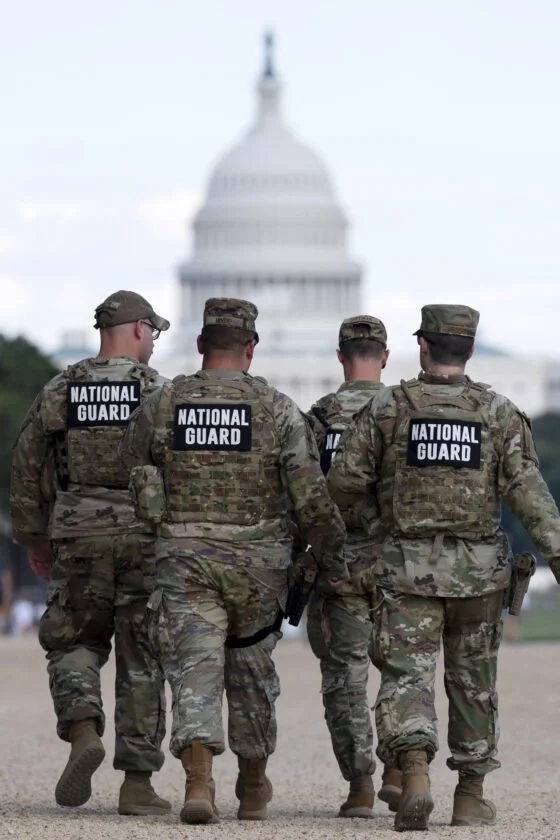
Members of the West Virginia National Guard patrol the National Mall Friday, Aug. 29, 2025, in Washington. Credit: AP Photo/Jose Luis Magana
Legal and Ethical Framework
The proper use of the military is determined by a framework of domestic laws, international treaties, and ethical principles, which vary depending on whether military force is being used at home or abroad.
This framework seeks to ensure force is used legally and with accountability, upholding democratic norms and international humanitarian law.
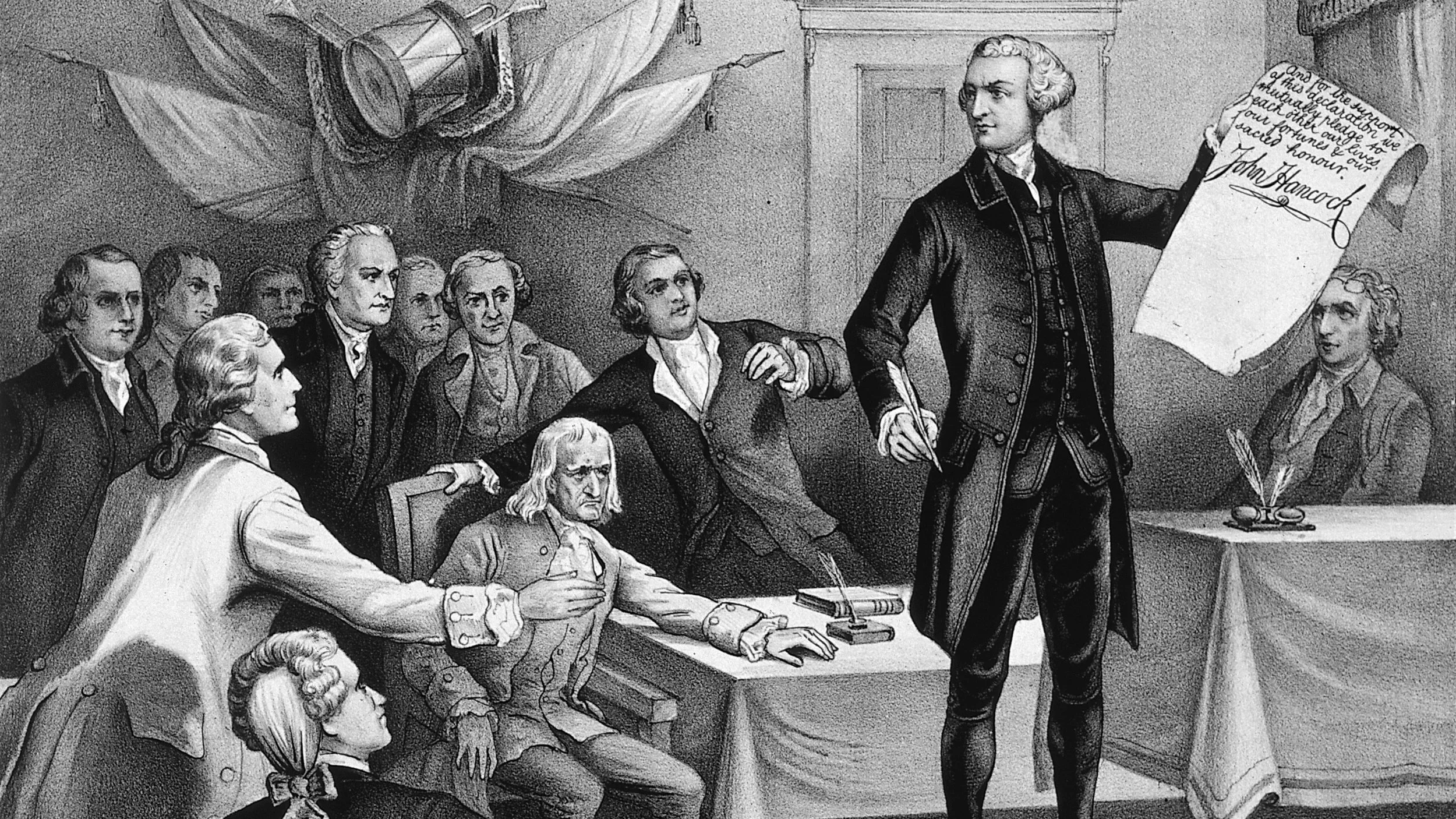
Delegates debate the foundations of American constitutional law. Credit: MPI / Getty Images
Constitutional Division of War Powers
The Constitution divides war powers between Congress and the President:
Under Article I, Section 8, Congress is empowered to declare war, provide for and regulate the Armed Forces, issue letters of marque and reprisal, and call forth the militia to suppress insurrections, repel invasions, or "execute the Laws of the Union."
Under Article II, the President serves as Commander in Chief, responsible for directing the Armed Forces as they conduct hostilities, put down insurrections, or execute the law when constitutionally authorized to do so.
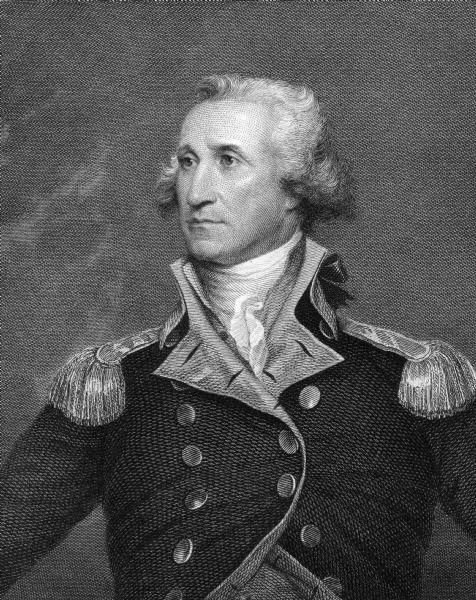
Portrait of George Washington in military uniform, representing the origins of the Commander in Chief role. Credit: Wisconsin Historical Society, A. B. Durand, Portrait engraving of George Washington in military regalia, Image ID: 23981.
Domestic Use of the Military
For domestic matters, the use of the military is highly restricted to protect against military interference in civilian affairs.
Among the laws that govern domestic military use are:
The Posse Comitatus Act (1878)
The War Powers Resolution (1973)
The Insurrection Act (1807, amended several times since)
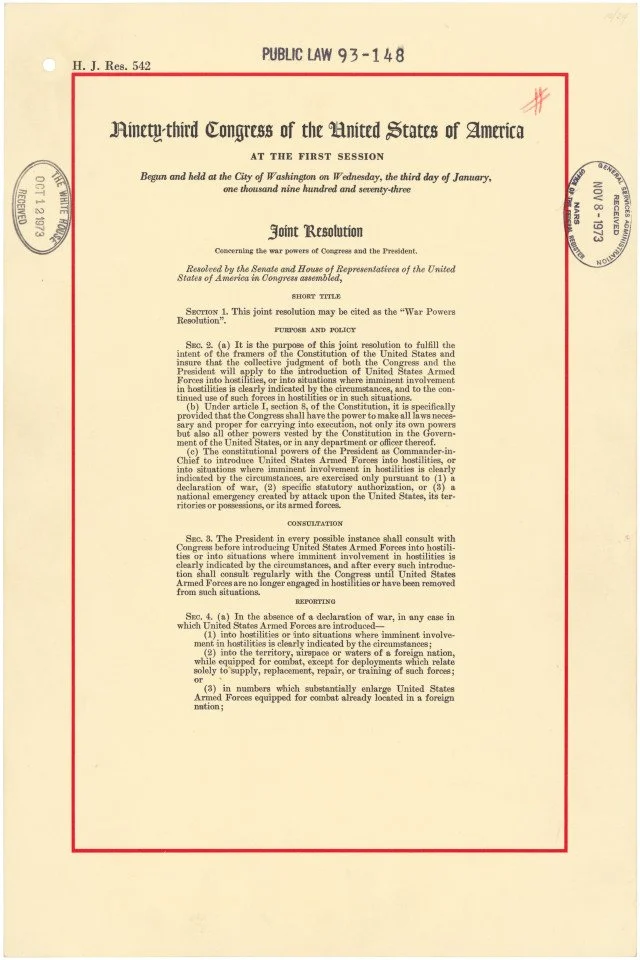
The official copy of the War Powers Resolution, passed over President Nixon’s veto in 1973. Image credit: National Archives and Records Administration
The Posse Comitatus Act
The Posse Comitatus Act is a federal law that prohibits the use of the U.S. Army, Air Force, Navy, and Marine Corps for civilian law enforcement without express congressional authorization. This prevents the military from conducting domestic arrests, searches, and surveillance.

Recent Concerns and Criticism
The 47th President’s recent use – and announced future use – of active duty Marines and federalized National Guard troops to help law enforcement agencies in major U.S. cities has been questioned and criticized by elected officials, former National Guard generals, and a federal judge.
Their recent deployment in greater Los Angeles (for example) was neither authorized by Congress nor requested by the governor or mayor.
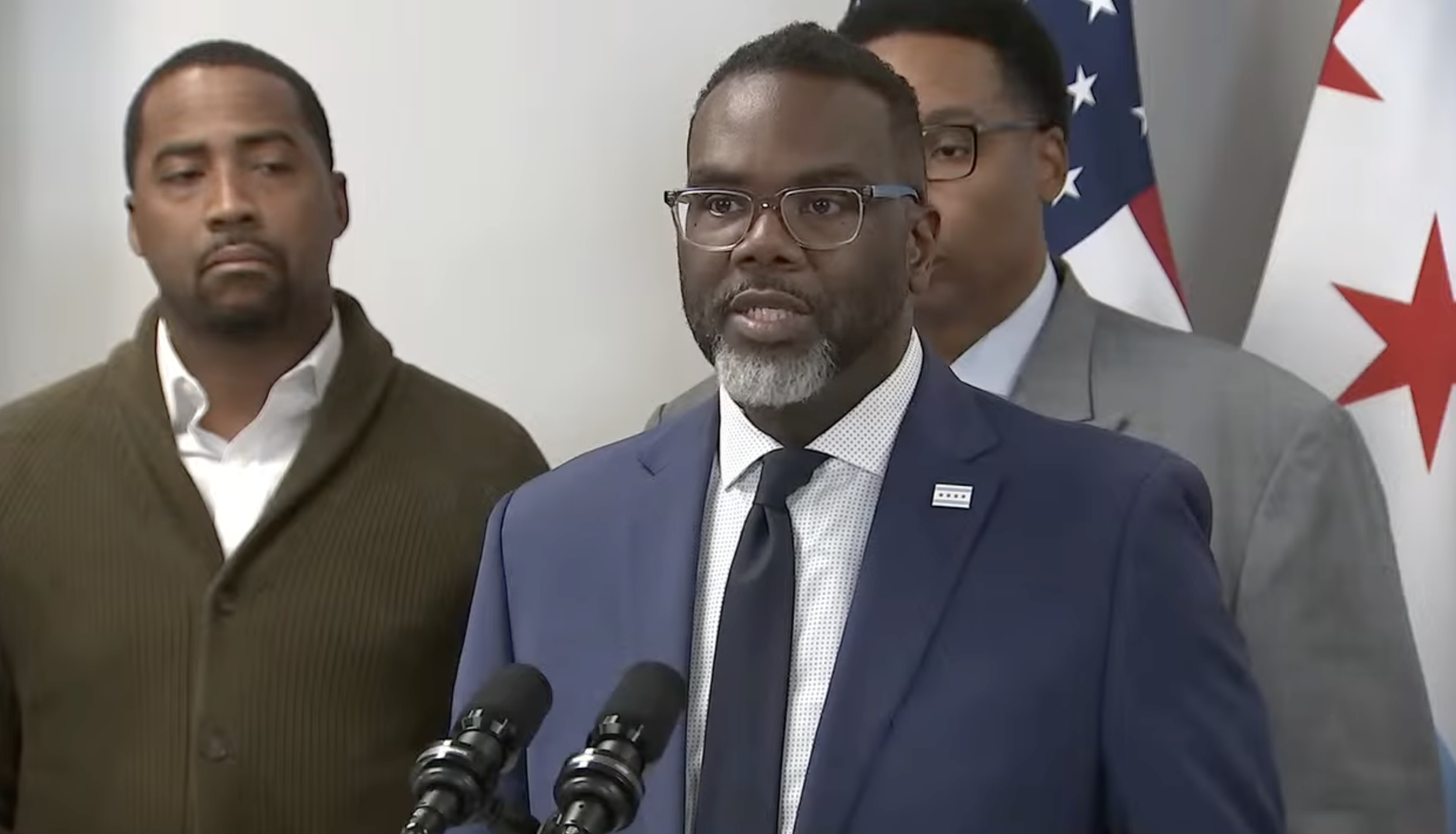
Chicago Mayor Brandon Johnson criticizes what he called ‘unconstitutional federal overreach’ regarding federal and National Guard deployments during a City Hall news conference. Source: ABC7 Chicago YouTube livestream, Nov. 17, 2025
Impacts on National Guard Members and Families
One more consequence to consider is the impact on National Guard members’ families and employers, as many Guard members have fulltime jobs outside their National Guard service and military benefits often lag or are less than those of active duty service members.
National Guard deployments, even domestic ones, put additional strain on families and employers.
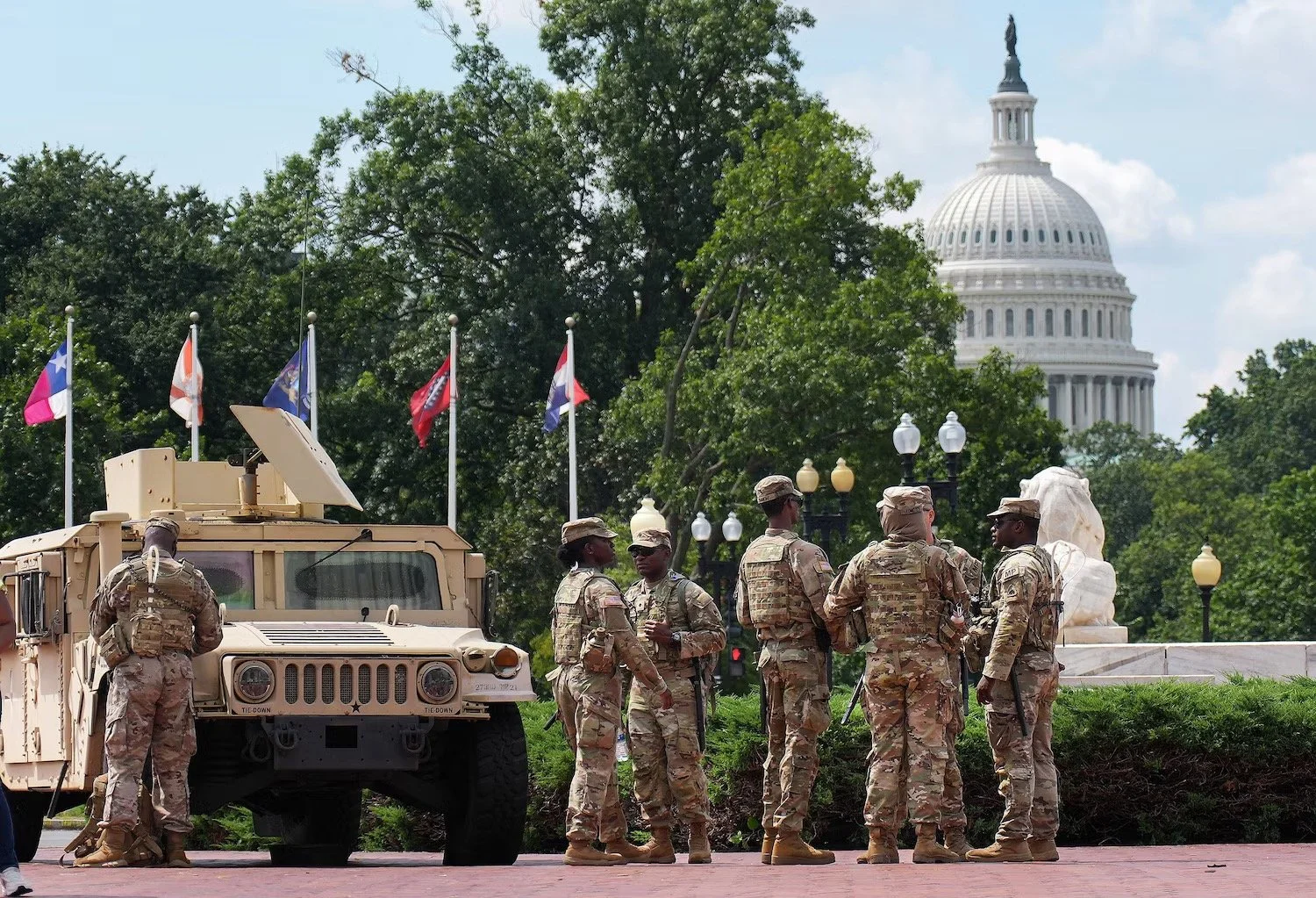
Members of the National Guard stand by at Union Station, August 14, 2025 in Washington. Credit: Kevin Dietsch/Getty Images
Broader Concerns
Aside from legal considerations, deployment of military forces against U.S. citizens has raised concerns about the politicization of the military and questions about the proper role of the U.S. military in domestic activities, since both the National Guard and active duty forces have traditionally been used for disaster response and other lifesaving operations.
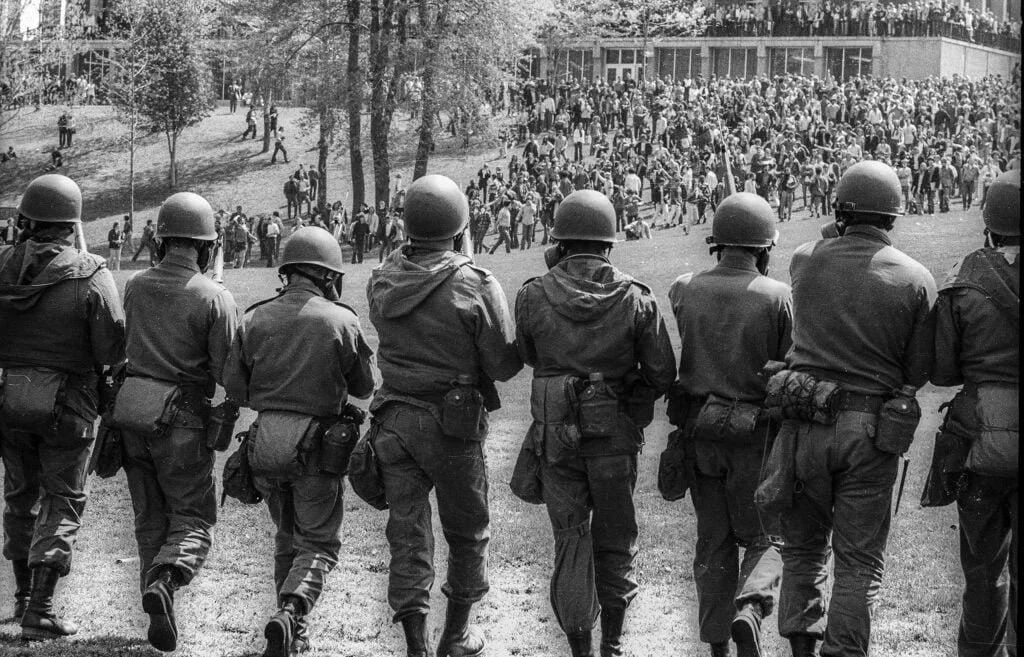
Ohio National Guard confronts student protesters at Kent State University during anti-war demonstrations, May 4, 1970. Credit: Howard Ruffner/Getty Images
How NSL4A Is Taking Action
Maintaining promises to our veterans
The Background
As a nation, we made a sacred promise to those who have been willing to fight and die on behalf of our country. Breaking that covenant is dishonorable.
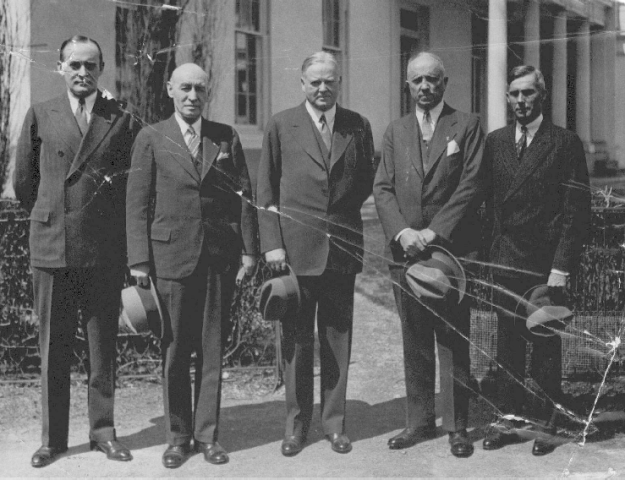
Group photo of signatories to Executive Order 5398, which established the Veterans Administration — July 21, 1930. Credit: Charles M. Griffith, Jr / VA.gov
Understanding the Issue
Chaotic mismanagement and layoffs of the VA workforce have caused severe staffing shortages in medical centers nationwide as the VA loses thousands of core medical professionals. This will harm not only veterans and their families but also the broader community.
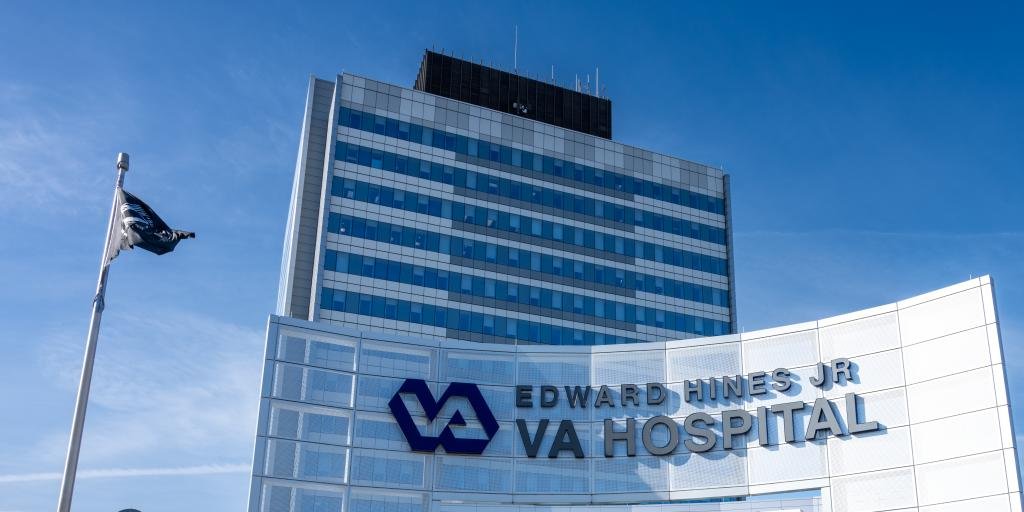
Edward Hines Jr. Hospital, part of the VA health care system, which relies on a stable workforce to serve veterans and support medical research. Source: U.S. Department of Veterans Affairs, Hines Healthcare website
Research and Readiness at Risk
The hiring freeze and cancellation of contracts have seriously harmed VA’s ability to conduct vital medical research that benefits all Americans.
The VA also plays a little-known but critical national role:
It serves as a backstop during national emergencies, providing surge medical capacity when disasters or crises strike.
Weakening the VA’s direct-care system undermines this safety net for everyone.
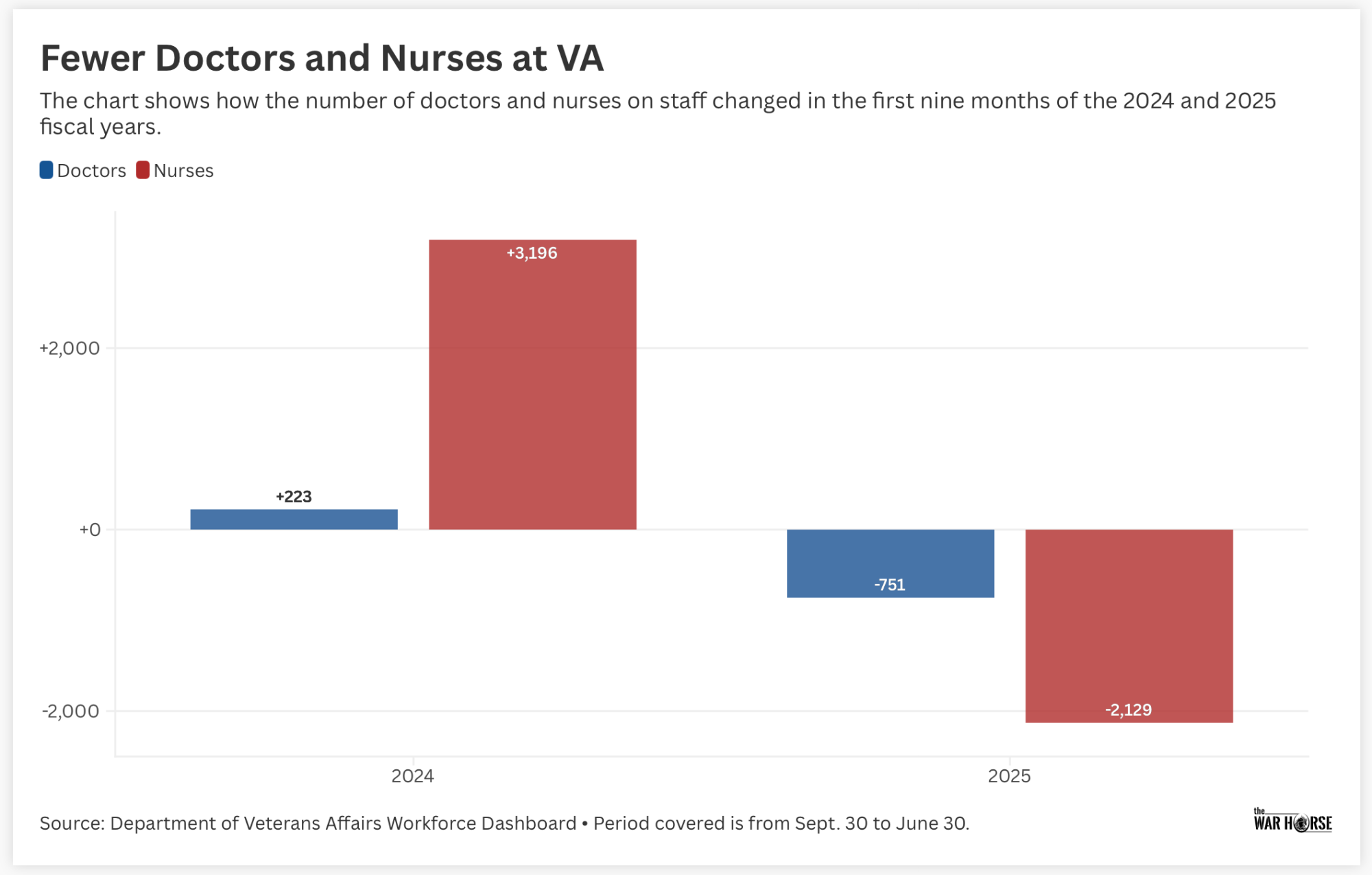
VA staffing trends show a decline in the number of doctors and nurses in the first nine months of the 2024 and 2025 fiscal years. Source: Department of Veterans Affairs Workforce Dashboard, Sept. 30–June 30
A Healthcare System Under Threat
The proposed budget will dramatically increase reliance on community care, even as many veterans already face long wait times for appointments.
This shift could further delay access for millions of veterans joining already crowded community provider networks.
- Holds providers to rigorous quality standards
- Offers evidence-based, culturally competent care
- Delivers care specifically designed for veterans
- Outside providers often lack veteran-specific training
- Quality standards and oversight vary widely
- Rural veterans face greater barriers due to hospital closures
Education and Economic Stability
It’s not just healthcare that’s suffering.
Inadequate staffing has led to long delays for GI Bill benefits, disrupting student veterans’ education. Weak oversight has exposed veterans to fraud, and errors in loan forgiveness programs are leaving many without promised relief.
The Broader Consequences
Weakening the VA doesn’t just harm veterans. It destabilizes entire communities, threatens national emergency preparedness, and undermines one of the few institutions where government healthcare consistently drives medical innovation.
How NSL4A Is Taking Action